Overall concept and approach
The RENEW project aims to design, develop, and validate a new generation of critical components for advanced energy systems capable of operating under conditions that exceed the limits of conventional materials and manufacturing solutions. These components are intended for highly demanding applications, particularly in next-generation nuclear energy systems, where exposure to molten lead, molten salts, high-pressure steam, supercritical CO₂, and extreme thermo-mechanical loads requires unprecedented levels of performance and reliability.
At the heart of the project is the adoption of Alumina Forming Austenitic (AFA) steels, an innovative class of materials capable of combining outstanding corrosion resistance, superior mechanical strength, and long-term durability. Rather than focusing solely on material development, RENEW addresses the entire value chain, from material design and processing to the production and validation of demonstrator components representative of real industrial applications.
Understanding Industrial Challenges
The project begins with a comprehensive assessment of the operational environments and technological challenges faced by the energy sector. Drawing on the expertise of industrial and research partners, RENEW identifies the limitations of currently available materials when exposed to aggressive environments, high temperatures, and prolonged service conditions.
This analysis provides a clear understanding of the performance gaps that must be overcome to ensure safer, more efficient, and longer-lasting energy infrastructures. Particular attention is given to applications where corrosion resistance, structural integrity, and durability are critical requirements for successful operation.
Targeting High-Value Components
Based on this evaluation, the consortium identifies strategic components with the highest potential to benefit from AFA steel technology. These demonstrator components are selected because of their relevance to advanced energy systems and the significant operational improvements that can be achieved through enhanced material performance.
The project then translates industrial needs into specific performance requirements and measurable targets. These include resistance to oxidation and corrosion, mechanical strength at high temperatures, weldability, manufacturability, and environmental performance. Such requirements are defined in close alignment with industry standards and future market expectations.
Advanced Materials for Extreme Conditions
One of the most demanding application scenarios considered within RENEW concerns advanced nuclear reactors, particularly lead-cooled systems operating at temperatures around 600°C and above. Under these conditions, conventional stainless steels often fail to provide adequate protection due to the instability of their chromium-based oxide layers.
AFA steels offer a promising alternative thanks to their ability to form a stable and protective alumina layer on the surface. This naturally occurring barrier significantly improves resistance to corrosion and oxidation in aggressive environments while preserving the structural integrity of the material during long-term operation.
The selected component requirements are therefore translated into material performance objectives including:
-
High-temperature oxidation resistance;
-
Corrosion resistance in molten lead and supercritical CO₂ environments;
-
Long-term creep strength between 600°C and 750°C;
-
Compatibility with industrial welding and joining techniques;
-
Reduced lifecycle environmental impact.
In addition, alloy compositions will be optimized based on available scientific knowledge to minimize potential degradation mechanisms associated with neutron exposure, such as swelling, embrittlement, or activation effects. While irradiation testing is not foreseen within the project, these considerations are incorporated into the material design strategy.
From Materials Development to Industrial Demonstration
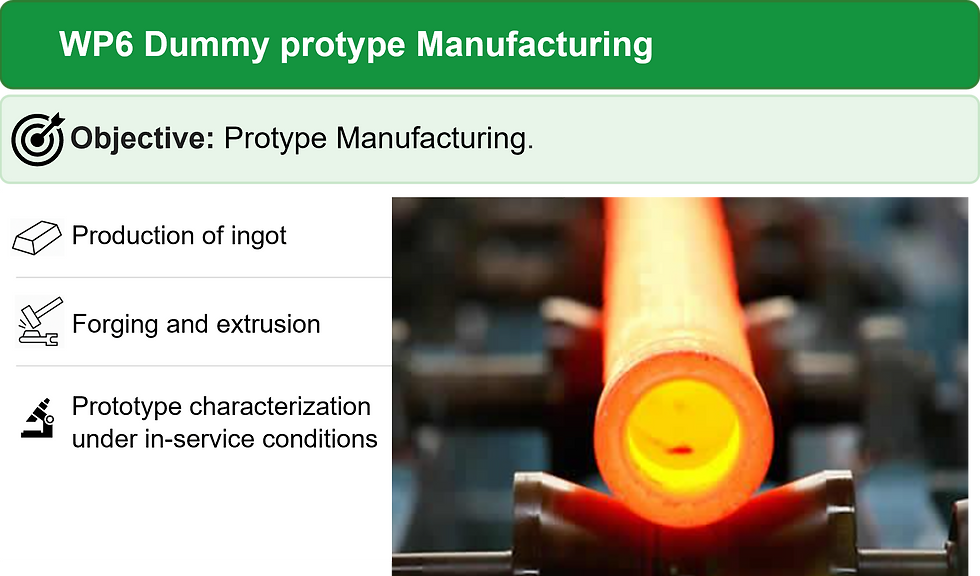
RENEW will validate its technological approach through the production of laboratory-scale AFA steel castings manufactured using a combination of raw materials, recycled scrap, and Direct Reduced Iron (DRI). These materials will be processed using optimized manufacturing routes and transformed into demonstrator components that replicate the geometry and operating requirements of industrial applications.
The resulting prototypes will undergo extensive characterization and performance testing under simulated service conditions. These activities will verify their suitability for demanding energy-sector applications and provide essential data for future industrial deployment.
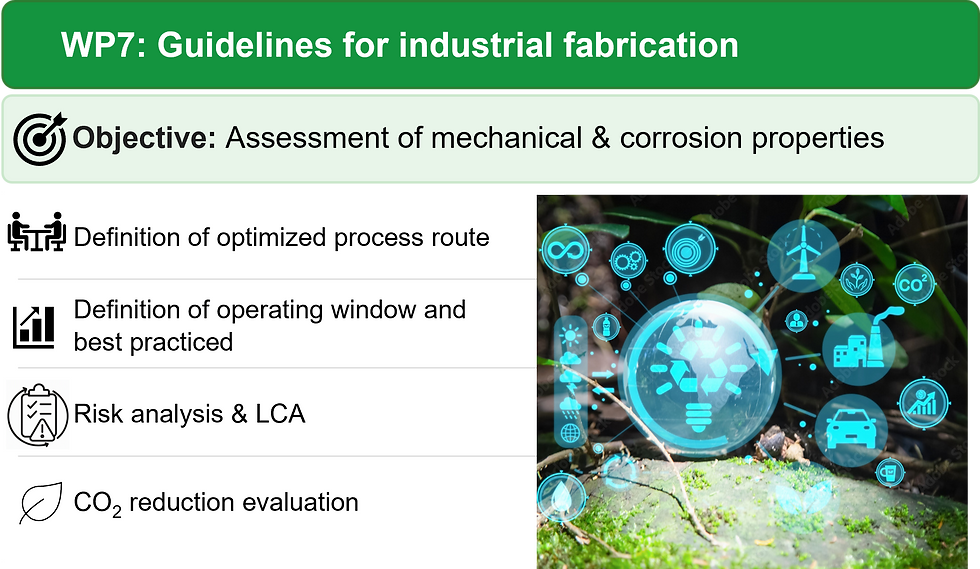
To support technology transfer and large-scale implementation, the project also includes a comprehensive risk assessment covering material behavior, manufacturing challenges, welding processes, and scale-up considerations. Appropriate mitigation strategies will be developed to ensure the robustness and industrial feasibility of the proposed solutions.
Driving Sustainability and European Energy Resilience
Sustainability is a key pillar of the RENEW project. An integrated Life Cycle Assessment (LCA) will evaluate the environmental impact of the new production route and quantify the benefits associated with the use of AFA steels.
The assessment will focus on reducing CO₂ emissions through increased scrap utilization, optimized manufacturing practices, and the extended service life of components. By combining improved material performance with resource-efficient production methods, the project seeks to contribute directly to the European Union’s objectives for decarbonization, energy security, and industrial competitiveness.
Building the Future of Advanced Energy Systems
By bringing together expertise in metallurgy, nuclear engineering, manufacturing technologies, and environmental assessment, RENEW establishes a multidisciplinary framework for the development of critical energy infrastructure components. The project aims to demonstrate that AFA steels can become a reliable and cost-effective alternative to conventional high-performance alloys, enabling safer, more efficient, and more sustainable energy systems for Europe’s future.
Through its innovative approach, RENEW will lay the foundations for the industrial adoption of next-generation materials and manufacturing technologies, strengthening Europe's technological sovereignty and supporting the transition towards a resilient low-carbon energy system.
Structure of the project
The methodological framework is designed, building upon robust foundational research and clearly defined milestones. Starting from a Technology Readiness Level of 3, characterized by experimental proof of concept at a laboratory scale, the project aims to achieve a TRL of 5 where technology has been validated in a relevant environment.
The methodology includes several phases:
-
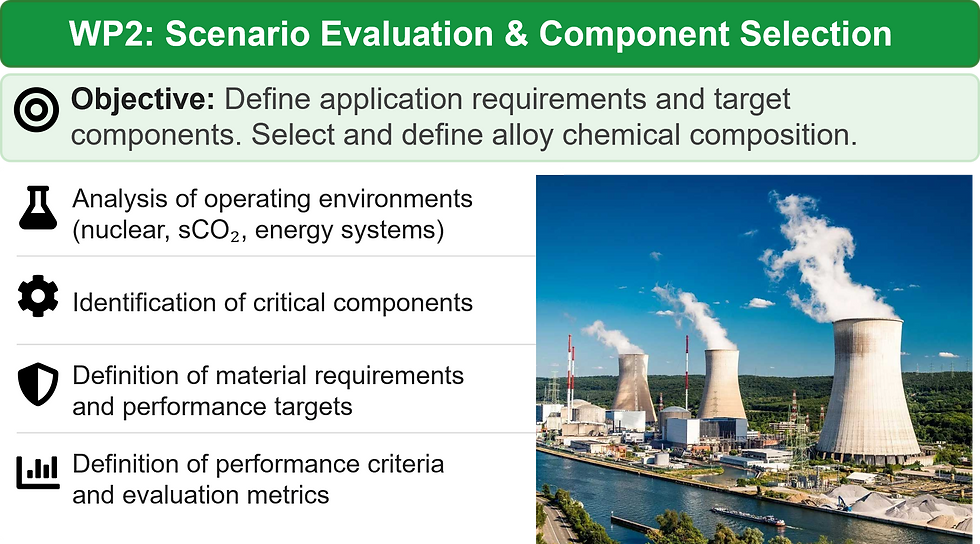
Scenario Evaluation and component selection (WP2)
-
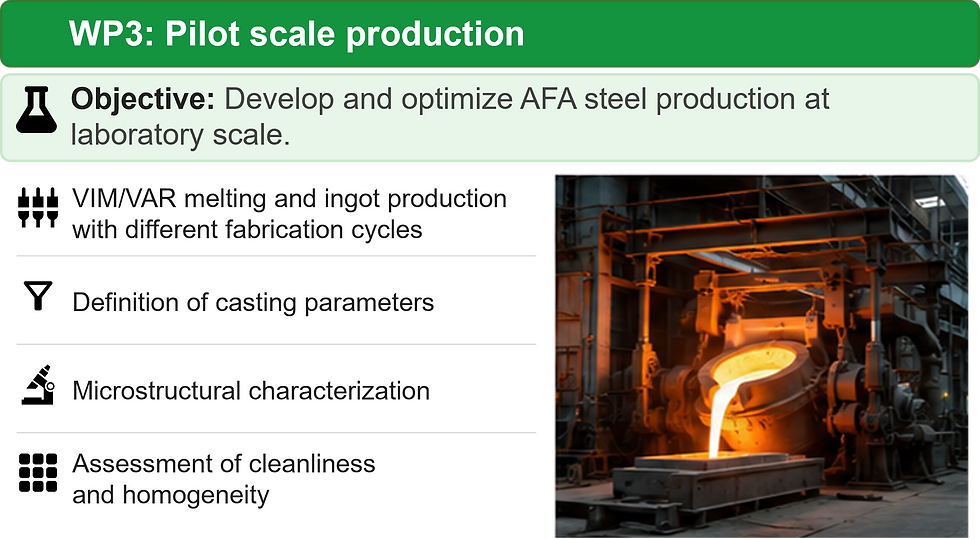
Pilot scale production (50-100 kg) to evaluate preliminary scalability and preliminary material properties assessment (WP3).
-
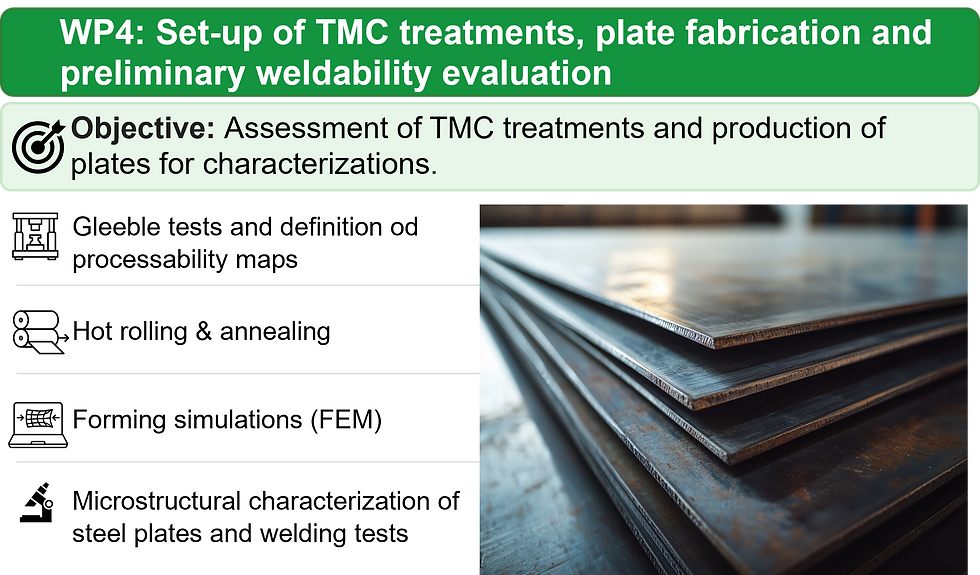
Comprehensive thermomechanical studies to optimize the process conditions for rolling and extrusion production process, assessing AFA processability (WP4).
-
Preliminary welding studies to ensure joint integrity under operational conditions, essential for nuclear and energy applications (WP4).
-
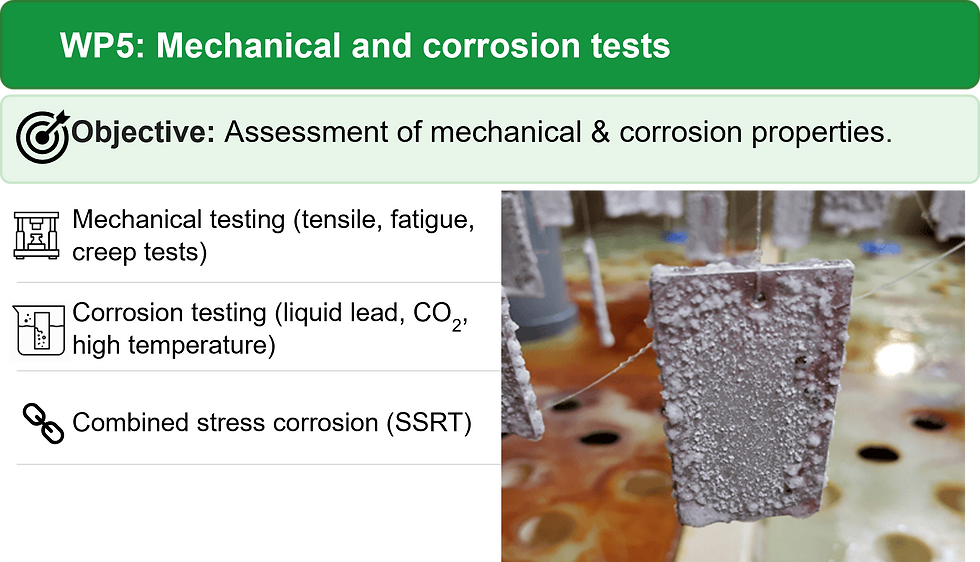
Advanced material characterization, involving detailed mechanical and corrosion testing under realistic environmental conditions, focusing on molten lead with clear benchmarks against the reference materials (WP5).
-
Mock-up realization to validate intermediate manufacturing processes, ensuring the reliability of the component fabrication procedures (WP6).
-
Studies on risk assessment related to component fabrication and Life Cycle Assessment (LCA) to evaluate recyclability, considering factors such as irradiation, and validate the environmental impact of the materials and processes developed in the project. (WP7)
-
Guidelines for AFA steel fabrication and feasibility study for large industrial production (WP7)
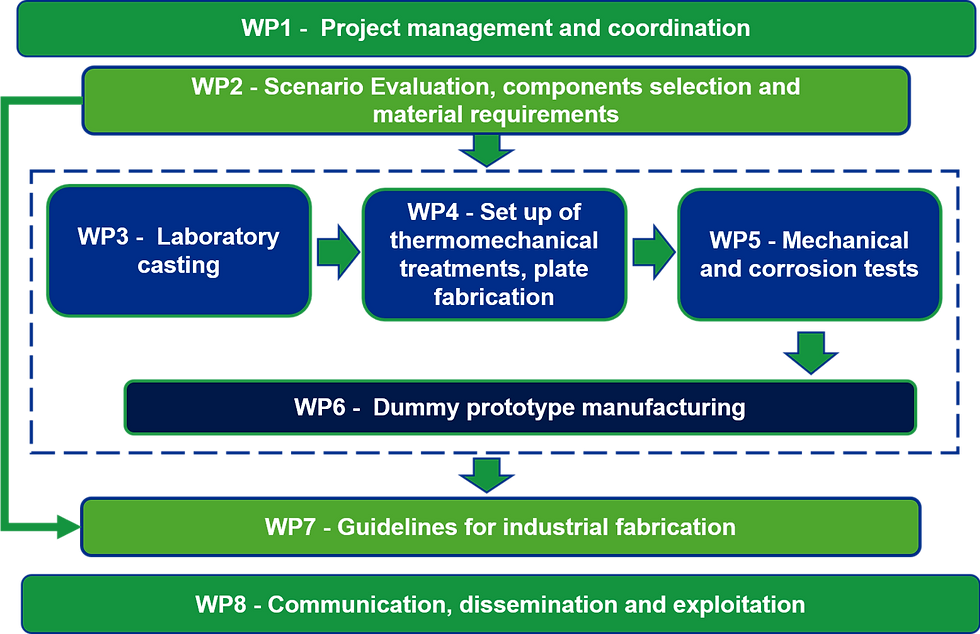
The proposed methodology is built on a systematic, multi-phase approach that spans from fundamental research and performance benchmarking to risk assessment and sustainability mapping.
This structured approach ensures that the project delivers not only advanced materials, but engineered, manufacturable, dummy components that meet the specific needs of future energy systems. RENEW goes beyond laboratory innovation, translating advanced material capabilities into high-performance, scalable component solutions for harsh and demanding environments.